OUR TEAM
The Sumner Stress Lab studies trauma at the intersection of the mind and the heart,
and builds the tools that help the brain and body find their way back to safety.

The Sumner Stress Lab studies trauma at the intersection of the mind and the heart,
and builds the tools that help the brain and body find their way back to safety.

A message from
Jennifer Sumner, PhD
Principal Investigator

Trauma does not just vanish when the danger passes—something relegated to a distant memory. It can settle into the body, altering biology in ways we are only beginning to fully understand. Long after memories fade or are pushed aside, the body can continue to respond, through the immune system, the heart, and even the cellular processes that shape how fast we age. Trauma is not only psychological. It is physiological.
For decades, we have recognized the emotional consequences of traumatic events. What science now makes clear is broader and more consequential: life’s shocks can recalibrate the body’s internal systems. They can disrupt cardiovascular rhythms, weaken immune regulation, increase inflammation, and accelerate biological aging. Trauma can become a long-term health risk, not just a painful chapter in a person’s past.
This is the terrain my team studies at The Sumner Stress Lab at UCLA, where psychology, biology, and public health intersect. We examine how experiences such as violence, disaster, or serious, life-threatening illness can redesign emotional experience and physiology. At the center of this work is a tenet that should no longer be controversial: the divide between mental and physical health is artificial. The body is an integrated system. Stress in one domain reverberates throughout the whole.
The urgency of this research is undeniable. Trauma is widespread and unevenly distributed across society. Millions experience it each year—many repeatedly—and its effects do not just disappear with time. Our research shows that people who develop posttraumatic stress disorder (PTSD) face significantly elevated
risks for developing cardiovascular disease and accelerated biological aging. Experiencing a life-threatening cardiac event can also trigger the onset of PTSD which, in turn, is linked to a worse prognosis. In a country where heart disease remains the leading cause of death, ignoring trauma’s role is not just an oversight, it is a missed opportunity for prevention.
In our lab, we approach trauma as a systems problem with wide-reaching consequences. Trauma doesn’t just shape how we feel. It shapes how long, and how well, we live. We trace the connections between mind and body: immune systems recalibrating in ways that erode resilience, inflammation rising under a sense of chronic threat, heightened physiological reactivity to danger and safety alike, telomeres shortening after adversity as if time itself were speeding up. In this work, we focus on diverse cohorts, aiming to understand how psychological and physiological responses intertwine to shape long-term cardiovascular risk after various types of traumatic experiences.
Our research underscores a central lesson: the body behaves less like a machine with isolated parts and more like an ecosystem shaped by cumulative stress and feedback loops. Importantly, this research is not about inevitability. Biology is not destiny. The same systems that encode trauma at the level of the brain and body are also capable of change.
The promise of this work lies in action. Preventing heart disease and its consequences requires taking trauma seriously. If we can identify the patterns that predict onset of disease, clinicians can intervene earlier, shifting medicine from crisis response to prevention. Trauma is not just a mental health issue—it is a cardiovascular one. And understanding how the body remembers may be one of the most powerful tools we have for protecting health across the lifespan.
Dr. Jennifer Sumner is a clinical psychologist and Associate Professor of Psychology at UCLA. Her program of research lies at the intersection of the psychological and physical health consequences of trauma exposure. Dr. Sumner received her Bachelor’s degree in Psychology from Pomona College and her Masters and PhD in Clinical Psychology from Northwestern University. She completed her predoctoral internship program at the Charleston Consortium (Traumatic Stress Track) and received postdoctoral training as an Epidemiology Merit Fellow at the Columbia University Mailman School of Public Health. When not in the lab, Dr. Sumner enjoys spending time with family and friends, hosting dinner parties, hiking in the Los Angeles mountains, and practicing yoga.
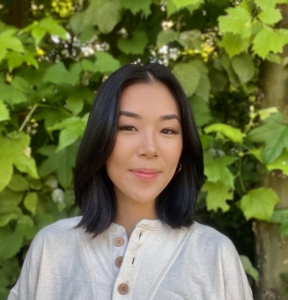
Leah is a doctoral student in UCLA’s Health Psychology program. She graduated from the University of Georgia with a BS in Psychology and worked as a Research Assistant at the Center for Family Research. Leah’s research focuses on understanding the biological pathways of trauma and how environmental and societal factors affect PTSD risk. She is also interested in intergenerational transmissions of trauma. Outside of the lab, Leah enjoys crocheting and gardening.
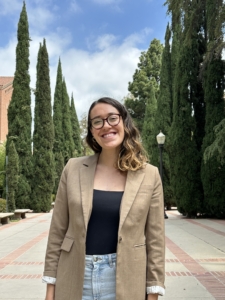
Shiloh is a doctoral student in UCLA‘s Clinical Psychology program. Shiloh graduated with a Neuroscience degree from Barnard College in 2019 and worked as a Research Coordinator in the Sumner Stress Lab for four years. Shiloh’s research interests include employing dimensional models of PTSD and early life adversity in relation to health outcomes and examining resilience factors that impact posttraumatic health outcomes. In her free time, she enjoys spending time outdoors, trying new restaurants around LA, and spending time with her puppy, Lola.

Kim is a doctoral student in UCLA‘s Clinical Psychology program. Her research interests include understanding how early life adversity and traumatic experiences impact the development of adverse mental and physical health outcomes among underserved communities. Kimberly hopes to integrate her prior experience in adolescent trauma and psychosis research with the work being done at the Sumner Stress Lab. During her free time, Kimberly enjoys baking, going to Dodger games, and spending time with friends and family.
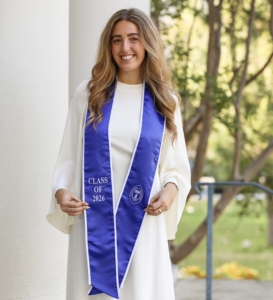
Sarah graduated from Pomona College in 2026 with a B.A. in Neuroscience. Her research interests include better understanding how adverse experiences manifest psychologically and physiologically, with a special interest in neurodevelopmental periods and underrepresented populations. Sarah hopes to build on her previous experience studying early life adversity by exploring mechanisms linking stress and adversity to health outcomes at the Sumner Stress Lab. In her free time, Sarah enjoys reading, all manners of sports, traveling, and hanging out with her friends.
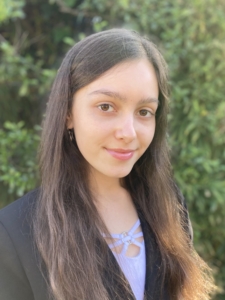
Tanisha is an undergraduate student at UCLA majoring in Psychology. Her research interests lie in how cardiovascular events are precipitated by stress and trauma. She is also interested in how expressing oneself through creative and meditative activities can lower stress and reduce cardiac symptoms. After graduation, she aspires to continue doing research and pursue a doctoral degree. Besides research, she enjoys visual arts and crafts, journaling, taking long walks, spending time with family, and volunteering for various organizations including the Los Angeles Public Library.

Elizabeth is an undergraduate student double-majoring in Psychology and Neuroscience. Her research interests focus on understanding how adverse life events impact women’s mental and physical health. She is particularly interested in exploring how perceived anxieties and stressors related to social pressures, relationships, and societal expectations affect young women. She aims to understand the role of social connectedness and belonging in shaping their mental health and physical health. After graduation, Elizabeth intends to pursue graduate school to earn a doctoral degree. In her downtime, she likes cooking, exploring new restaurants and cafes, and painting.
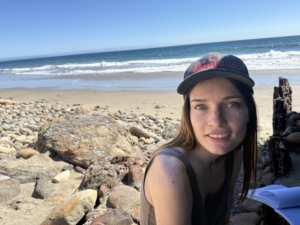
Puma Buck is an undergraduate student majoring in Psychology. She is interested in researching the intersection of physical and psychological health, with a focus on how early life experiences, stress, and personality traits such as perfectionism influence immune function and other physiological systems. She is also interested in the potential epigenetic effects of stress and trauma. Puma plans to pursue graduate training and a career in psychobiological research after graduating. Outside of research, Puma loves playing guitar, reading, and spending time in nature.

Janice is an undergraduate student at UCLA double-majoring in Psychology and Philosophy. She is inspired by the lab’s life-giving research that highlights the crucial connection between mind and body in order to promote holistic wellbeing in individuals’ lives. Her passion for education both in and out of the classroom compels her to become a research-literate investigator with a deep awareness and care for those she wishes to help. Following her undergraduate years, Janice aims to pursue a doctorate in clinical psychology, hoping to translate not only her knowledge but ultimately her heart to those in need. Outside of the lab, Janice enjoys volunteering at church, going on nature walks, and writing articles for the Daily Bruin.
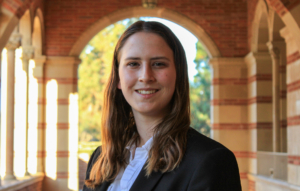
Scarlett is an undergraduate student at UCLA majoring in Psychology. Her research interests lie at the intersection of stress psychology and women’s health, examining the unique way social and biological factors influence traumatic events and the effects of those traumatic events in women. After graduating, Scarlett plans to pursue a doctoral degree in Clinical Psychology. Beyond research, Scarlett enjoys horror films, baking, and spending time with friends and family.
Hover to learn more
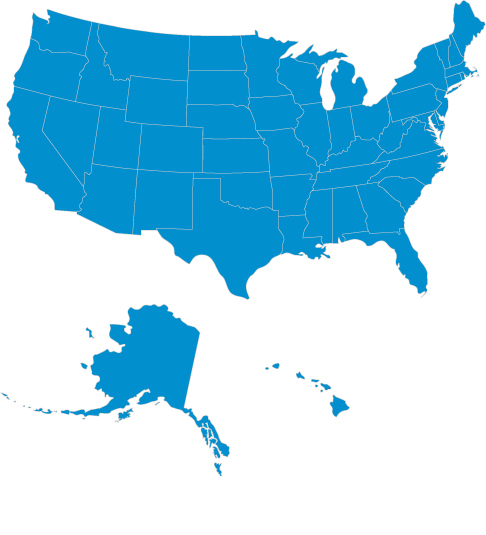
UCLA School of Medicine and VA Greater Los Angeles Healthcare System, Los Angeles, CA
Ramin Ebrahimi, Tzung Hsiai, Kate Wolitzky-Taylor, Olujimi Ajijola
Harvard T.H. Chan School of Public Health, Boston, MA
Karestan Koenen, Laura Kubzansky, Eric Rimm, Andrea Roberts
Harvard University, Cambridge, MA
Kate McLaughlin
National Center for PTSD, Boston, MA
Erika Wolf
Columbia University Irving Medical Center, New York, NY
Donald Edmondson, Ian Kronish, Daichi Shimbo, Joseph Schwartz
Wayne State University, Detroit, MI
Tanja Jovanovic
Emory University School of Medicine, Atlanta, GA
Vasiliki Michopoulos, Rebecca Hinrichs
Boston University School of Public Health, Boston, MA
Jaimie Gradus, Anthony Rossellini, Sandro Galea
Stanford University, Stanford CA
Katharine Sears Edwards
Alexandria, VA
SCAD Alliance